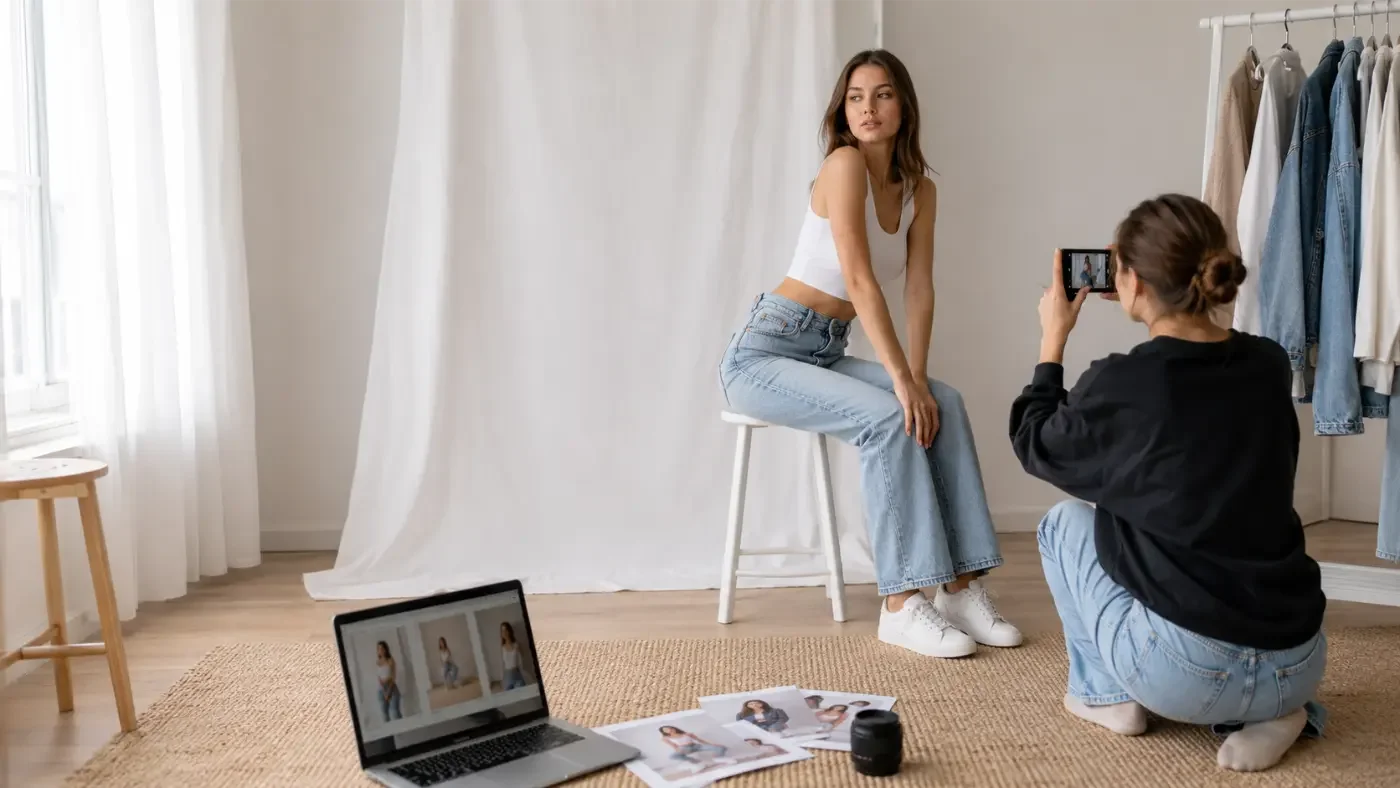
What parents should know if their teen wants to model: a clear guide to safety, agencies, school, money, and the realities behind the glossy images.
The Dream, the Myth, and the Group Chat Panic
When a teenager says they want to model, parents tend to split into two camps. One hears opportunity: confidence, travel, maybe even a career. The other hears danger: scams, pressure, missed school, and a suspiciously urgent email asking for a deposit. Both instincts are understandable. Modeling is real work, but it is also a business that attracts fantasy like a porch light attracts moths.
The first thing to know is that modeling is not one thing. Fashion modeling, commercial modeling, e-commerce, showroom work, fit modeling, beauty campaigns, and social media content all ask for different looks, skills, and temperaments. A teen who may never walk a runway can still book steady work in retail campaigns or online product shoots. That matters, because disappointment often starts when families imagine only the glossy version. The industry loves images, but careers are built on specifics.
Parents do not need to become instant fashion experts. They do need to become good editors. If an opportunity sounds too flattering, too fast, or too expensive, pause. Legitimate agencies make money when a model works. They do not need to squeeze families first. A professional agency may invite a meeting, ask for simple snapshots, and explain its commission clearly. It should not demand costly photo packages, mandatory classes, or immediate payment to “secure” representation. In modeling, urgency is often just a better-dressed form of nonsense.
It also helps to understand that being “discovered” is less fairy tale than process. Agencies look for potential, professionalism, and consistency. They may pass on a teen not because something is wrong, but because they cannot place them in the current market. That is disappointing, not catastrophic. A no in modeling is often just a no from one desk on one Tuesday.
“The camera sees everything,” fashion people like to say, and what it often sees first is not beauty but ease, discipline, and self-possession.
That is why the healthiest parental role is neither stage manager nor dream crusher. It is practical adult. Ask who is booking the job, where the shoot is, how long it lasts, what it pays, and who will be present. Read every contract. Keep expectations civilized. The teen may be entering a visual industry, but the parent’s job is gloriously unglamorous: safety, paperwork, transport, sleep, and snacks.
How to Judge an Agency, a Job, and the People in the Room
A reputable agency should be easy to research. It will have a visible roster, real contact information, and a track record of placing talent with recognizable clients or local commercial work. Its communication should be professional, not breathless. If someone discovered your child in a mall, on Instagram, or outside a coffee shop, that does not automatically mean scam. Scouts do approach people in ordinary places. But the next steps should still look professional: a verifiable office, a clear website, basic digitals, and no pressure to pay before anything happens.
Photos are another point where families get hustled. A teen does not need a cinematic portfolio on day one. Most agencies begin with clean, natural images: simple clothing, minimal styling, plain light, no heavy retouching. The irony of modeling is that the less everyone tries, the more useful the photos often are. Agencies want to see the person, not a high school prom version of a perfume ad.
Then there is the question parents ask quietly because it sounds impolite: who is actually in charge here? On a legitimate set, there is structure. A client, producer, photographer, stylist, hair and makeup team, and often a booker from the agency. Call times, rates, usage terms, and wardrobe expectations are explained. For minors, a parent or guardian should know where the teen is, who is supervising, and whether the environment is age-appropriate. If a shoot suddenly changes tone, location, or wardrobe in ways that were not discussed, that is not being “flexible.” That is a reason to stop.
Money deserves plain language. Parents should ask whether the job is paid, what the rate is, how usage works, and when payment arrives. Modeling income can look glamorous from across the room and surprisingly modest once commissions, taxes, and transportation sit down at the table. The real value early on may be experience and test shoots, but “experience” should not become a permanent substitute for pay. Even teenagers can learn the elegant art of not working for exposure.
Social media complicates everything. It can help a teen get noticed, but it can also turn them into their own unpaid marketing department. Parents should watch for direct messages from strangers, requests for private shoots, or “brand deals” with vague terms. Public visibility is not the same as professional legitimacy. If an opportunity cannot survive basic questions, it does not deserve access to a minor.
School, Self-Esteem, and the Long Game
The hardest part of teen modeling is often not the casting. It is the emotional math. The industry is built on selection, comparison, and waiting. A teen can be praised one hour and ignored the next. That is difficult for adults; for adolescents, whose identities are still under construction, it can hit like weather without a forecast.
Parents should pay attention to how the work affects mood, body image, friendships, and school. Modeling should not become a referendum on worth. If a teen starts talking as if every meal, pimple, inch, or follower count has career implications, the adult in the room has to restore perspective. Fashion is influential, but it is not wise. It reflects trends, budgets, and client preferences as much as it reflects beauty. Those are not the same thing, and confusing them can get expensive emotionally.
Education also matters more than many families assume. Even busy teen models need routine, structure, and future options. Very few modeling careers are long or predictable, and even successful ones zigzag. School is not the boring backup plan; it is part of the infrastructure that keeps a young person’s life from becoming entirely dependent on other people’s opinions.
The parents who handle this best usually do one unfashionable thing very well: they slow the whole story down. They allow curiosity without surrendering judgment. They understand that a teen may truly love the work and still need limits. They know that confidence built only on external approval is flimsy, while confidence built on skill, responsibility, and a full life tends to travel better.
So if your teen wants to model, you do not need to panic, and you do not need to print business cards for the family dog. You need clear eyes. Treat modeling as a job, not a coronation. Look for reputable representation, protect the minor, read the fine print, and keep school and emotional health in the frame. The glossy images are the least informative part of the business. What matters is what happens before and after the camera clicks.