How tall do you need to be to become a model? The short answer: it depends on the lane, the market, and what exactly you are selling.
Height is the question that follows aspiring models around like a persistent relative at a wedding. Before anyone asks about a walk, a book, a face, or whether a person can hold a camera’s attention for half a second without blinking like a startled pigeon, they ask: how tall are you?
It is not a silly question. In fashion, height has long functioned as a kind of industry shorthand. Designers want clothes to fall a certain way. Casting directors want consistency across a lineup. Agencies want to know where a model can realistically work. But height is also one of the most misunderstood requirements in the business, partly because people hear one rule and assume it applies to every corner of modeling. It does not.
If you want the clean answer, here it is: you do not need to be one exact height to become a model. You do, however, need to fit the market you are aiming for. Fashion loves categories, sometimes too much, and height matters differently in each one.
Height Standards, and Why They Exist
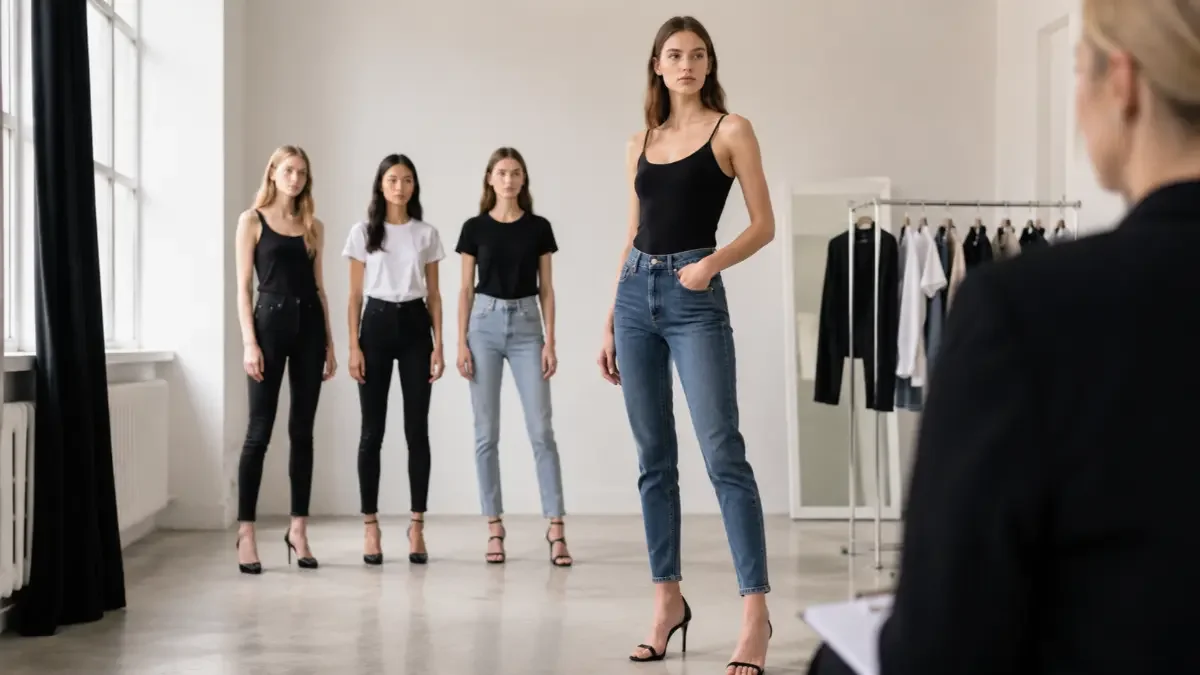
In high fashion and runway, the traditional expectation for women has often landed around 5'9" to 6'0", while men are commonly expected to be around 6'0" to 6'3". These numbers are not divine law. They are practical preferences shaped by sample sizes, show production, and the visual uniformity luxury brands tend to chase. Sample garments are made to standard proportions, and those proportions usually favor tall, lean frames. That is the unglamorous truth beneath all the glamour.
Editorial modeling tends to follow similar expectations because magazines and designer campaigns often pull from the same ecosystem. A model who fits runway samples can usually fit editorial samples too. That overlap is one reason height standards in fashion can feel unusually rigid.
But outside that narrow lane, the rules loosen fast. Commercial modeling, beauty modeling, e-commerce, fitness, lifestyle, showroom, fit, plus-size, petite, and parts modeling all work with different priorities. In those areas, clients care less about whether someone looks like they were built to stand beside six other models in matching stilettos and more about whether they sell a product convincingly.
Commercial clients, in particular, are often looking for people who feel relatable, specific, memorable, and camera-friendly. That may include taller models, shorter models, older models, and people with distinctive features that would have once been dismissed by a stricter industry. The market has widened because advertising has widened. Brands now want to reflect more of the people who actually buy things, which is a revolutionary concept only if you have spent too much time in fashion.
"There is no single modeling industry. There are several industries sharing one word."That is the key idea. When people ask how tall you need to be to become a model, they are usually asking the wrong version of the question. A better one is: what kind of model do you want to become?
What If You Are Shorter Than the Fashion Standard?
If you are below traditional runway height, you are not automatically out of options. You are simply less likely to fit the classic agency path into high fashion editorial and catwalk work. That distinction matters. Too many new models hear that they are "too short" when what is really meant is "too short for this specific category." Those are very different sentences, and one of them has a future in it.
Petite modeling exists, though it is often less standardized than people expect. Beauty campaigns can care far more about facial structure and skin than inseam. Jewelry clients care about hands, neck, ears, and posture. Swim and lingerie brands may prioritize proportion, confidence, and body awareness over height alone. E-commerce work often favors consistency and fit, but many brands cast broadly if the person photographs well and represents the customer they want to reach.
Social media has also shifted the old gatekeeping logic. Clients increasingly scout talent who can create an audience connection, not just wear a sample size. A shorter model with a strong look, excellent movement, and clear personal brand may book work because they understand how to hold attention, which is the real currency behind almost every image.
That said, realism is useful. If an agency tells a 5'6" woman that Paris runway is unlikely, that is not cruelty. It is market knowledge. A good scout does not sell fantasy; a good scout identifies where someone is actually bookable. The same goes for men who fall below standard fashion height. They may still thrive in commercial, fitness, grooming, catalog, or digital campaigns, especially if they photograph well and bring a strong presence.
Presence, by the way, is the part beginners often underestimate. Some people are technically the right height and disappear on camera. Others walk into a room and rearrange the air. The second kind gets remembered.
What Agencies and Clients Really Look For
Height matters, but proportion matters more than many newcomers realize. Agencies look at balance: shoulders, limbs, posture, movement, symmetry, and how clothes sit on the body. They also look for something harder to measure and easier to spot, a quality often called presence, edge, charm, or simply "the thing." Fashion is annoyingly vague about this because the concept is real. Some people photograph with a charge that cannot be taught.
That does not mean the industry is a magical meritocracy. It is still full of preferences, habits, and old biases dressed up as taste. But in practical terms, a model’s viability comes from the combination of market fit, reliability, visual impact, and professionalism. A person who is one inch shorter than a standard can still work if the rest of the package is strong and the target market makes sense.
So how tall do you need to be to become a model? Tall enough for the job you want, and distinctive enough for someone to remember you after the door closes. For runway and top editorial, that usually means meeting familiar height ranges. For commercial and many digital categories, it can mean something much broader. The smartest move is not to chase the one lane that flatters your fantasy. It is to identify the lane where your look, measurements, energy, and skills have real demand.
In other words, height opens some doors and narrows others. It is a factor, not a verdict. Fashion loves a rule until the right person comes along and makes it look silly. That, in its own way, is one of the industry’s oldest traditions.