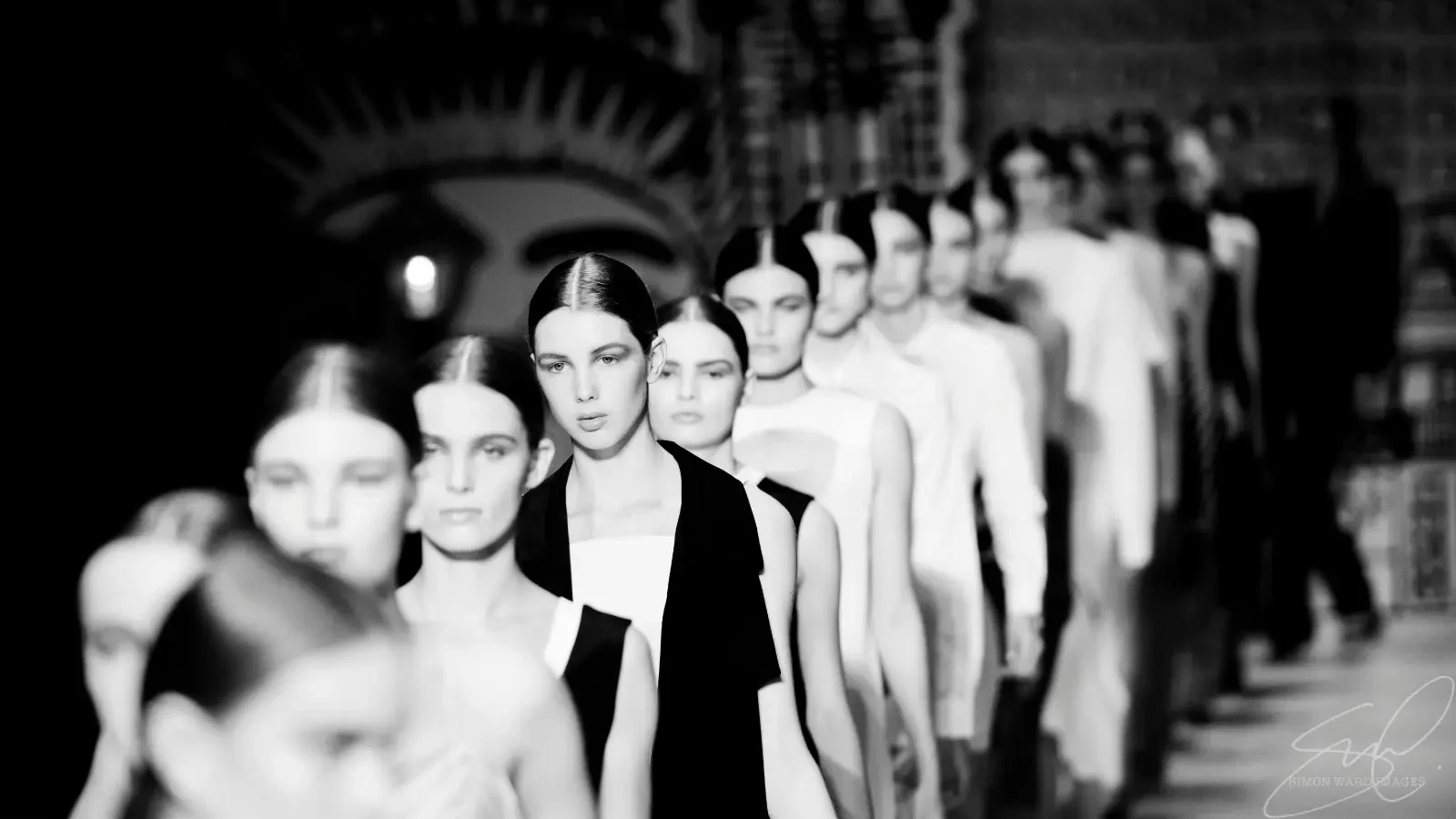
What model scouts really look for in new faces is less about perfection than presence, proportions, and the rare feeling that a camera has met its match.
The Myth of Instant Perfection
Ask the average person what model scouts want, and you will usually get a short, confident answer: height, cheekbones, and luck. That is not exactly wrong. It is just incomplete in the way a hanger is incomplete without clothes. The job of a scout is not to find a finished product standing under ideal lighting, already behaving like a campaign veteran. The job is to spot possibility before it has learned how to introduce itself.
That is why new faces can be so confounding to anyone outside the industry. A scout may pause over someone who looks almost ordinary in a supermarket line and walk right past a person who seems conventionally glamorous. Fashion has always had a weakness for the unexpected. A face that is a little off-center, a walk that has character, a presence that rearranges the mood of a room without asking permission, these are often more valuable than obvious prettiness. In modeling, perfection can be oddly boring. What scouts are often hunting is memorability.
They also look for proportions rather than isolated features. This can mean height, yes, especially in certain markets, but it can also mean how the neck sits on the shoulders, how the arms photograph, how the face changes in motion, and whether the body carries clothes with ease. A still image tells one story; movement tells another. Many experienced scouts know that the camera is both generous and cruel. It can flatten beauty and elevate strangeness. So they are not simply asking, “Is this person attractive?” They are asking, “Does this person become more interesting through the lens?” That is a different question, and it is where instinct begins to matter.
“You are looking for the thing you cannot quite explain at first, and then cannot forget later.”That sentence has floated around casting rooms for years in one form or another because it gets close to the truth. The strongest new faces often create a slight delay in recognition. You look once, then again. The second look is the whole business.
Presence, Professionalism, and the Camera Test
Scouts are also reading temperament, often in a matter of minutes. Modeling may trade in images, but it runs on stamina. A new face can have all the visual intrigue in the world and still struggle if they cannot take direction, keep a schedule, or survive long stretches of waiting without melting into drama. The fantasy version of fashion is a blur of flashbulbs and applause. The working version involves early calls, missed trains, endless fittings, and someone pinning a dress while speaking three languages at once. Scouts know this. So when they meet someone new, they are quietly looking for signs of resilience.
This is why personality matters, though perhaps not in the way people assume. A model does not need to be the loudest person in the room. In fact, many successful models are quite reserved. What matters is responsiveness. Can they listen? Can they adjust? Can they maintain energy when the novelty wears off? A camera can detect insecurity, but it can also detect thoughtfulness and calm. Some of the most compelling faces do not dominate a room socially; they transform when the lens appears, which is a much more useful magic trick.
Then there is the test photo, the humble snapshot that does not care about your favorite angle. Scouts love digitals because they strip away illusion. Clean light, simple clothes, little makeup, straightforward poses: this is the equivalent of meeting the architecture before the interior design. Good scouts are not disappointed by simplicity; they depend on it. They want to see skin, bone structure, posture, and expression without the fog machine of overstyling. If someone only works in a heavily edited photo, that is not a discovery. That is a group project.
Age and market matter too. What works for high fashion may not be what works for commercial, beauty, e-commerce, or fitness. Some faces are editorial, a little sharper, cooler, stranger. Some feel instantly accessible, which is its own highly bankable skill. A strong scout understands that a face is not just beautiful or not beautiful. It is useful in a particular lane. The smartest scouting is part intuition, part casting economics, and part anthropology with better shoes.
Why the Best Scouts Bet on Potential
The phrase “new face” sounds simple, but in the industry it means a person still carrying the rawness of possibility. That rawness is valuable because fashion likes to be the first to name something. Agencies, photographers, and brands all want the feeling of discovery. A scout who finds someone before the world agrees on their appeal has done the rarest thing in the business: seen ahead of the crowd.
That is also why polish can sometimes work against a newcomer. If someone arrives overly trained, hyperaware of trends, and posing like a collage of other models, a scout may hesitate. They are not looking for a perfect imitation of what already exists. They are looking for a face and presence that can grow into its own category. Individuality is not a slogan here; it is the asset. The industry changes quickly, but it never stops rewarding people who feel distinct.
In the end, what model scouts really look for in new faces is not one thing but a conversation between image and possibility. They look for structure, but also softness. Professional promise, but also mystery. They look for someone who can fit clothes and someone who can suggest a story larger than the clothes. Most of all, they look for the small electric signal that says this person is not finished becoming. That is the part no measurement chart can fully capture.
Fashion, for all its reputation for severity, is still a business built on hunches. The good scouts have educated eyes, but they also trust the shiver of recognition. They know a new face is not valuable because it confirms what we already know beauty to be. It is valuable because it may quietly persuade us to expand the definition. And in an industry that feeds on the next thing, that is about as close to prophecy as anyone gets.