How to take model digitals at home that actually work: a clear guide to simple photos that help agencies see your real look, not your filters.
The point of digitals is honesty
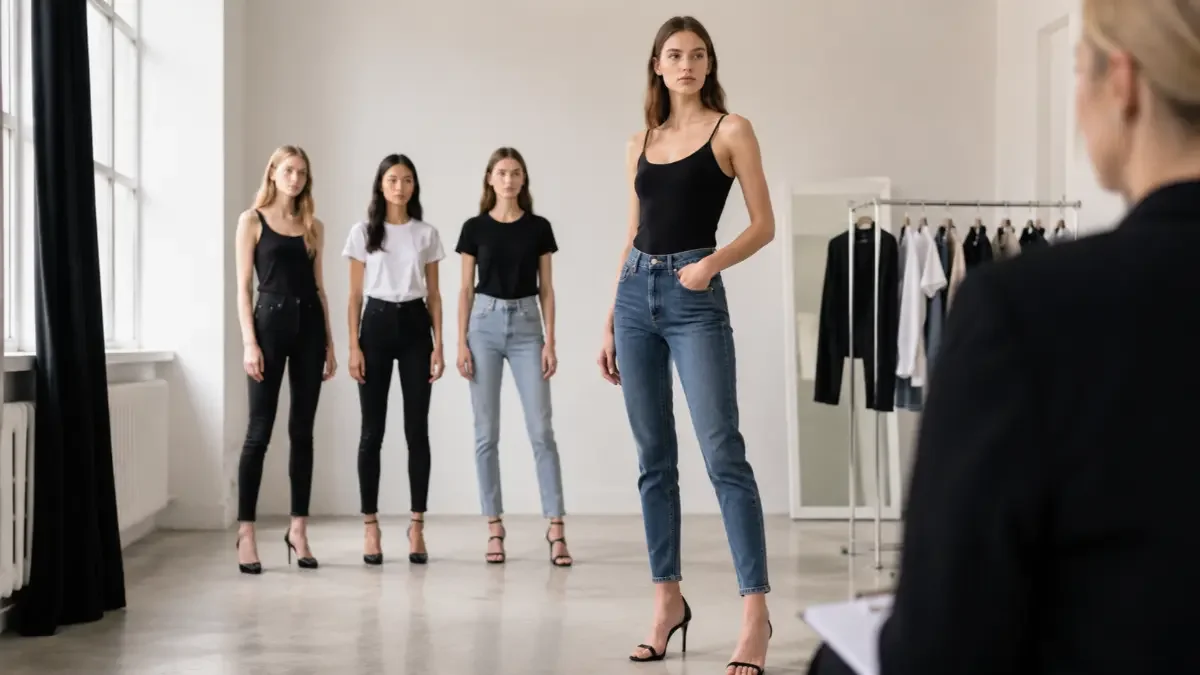
Model digitals are the least glamorous photos in fashion, which is exactly why they matter. They are not supposed to look like a campaign, a prom portrait, or the result of a long, expensive afternoon with a ring light and a retoucher who fears pores. They are meant to show agencies and clients what you actually look like right now, on an ordinary day, in ordinary light, standing upright like a person who may one day wear extraordinary clothes.
If you are wondering how to take model digitals at home that actually work, the first thing to understand is that the word “work” does not mean “look fancy.” It means the pictures do their job. A good digital lets a scout assess proportions, skin, posture, hair, profile, and presence without visual clutter. The image should answer a simple question: what walks into the room if this person arrives at a casting on Tuesday at 10 a.m.?
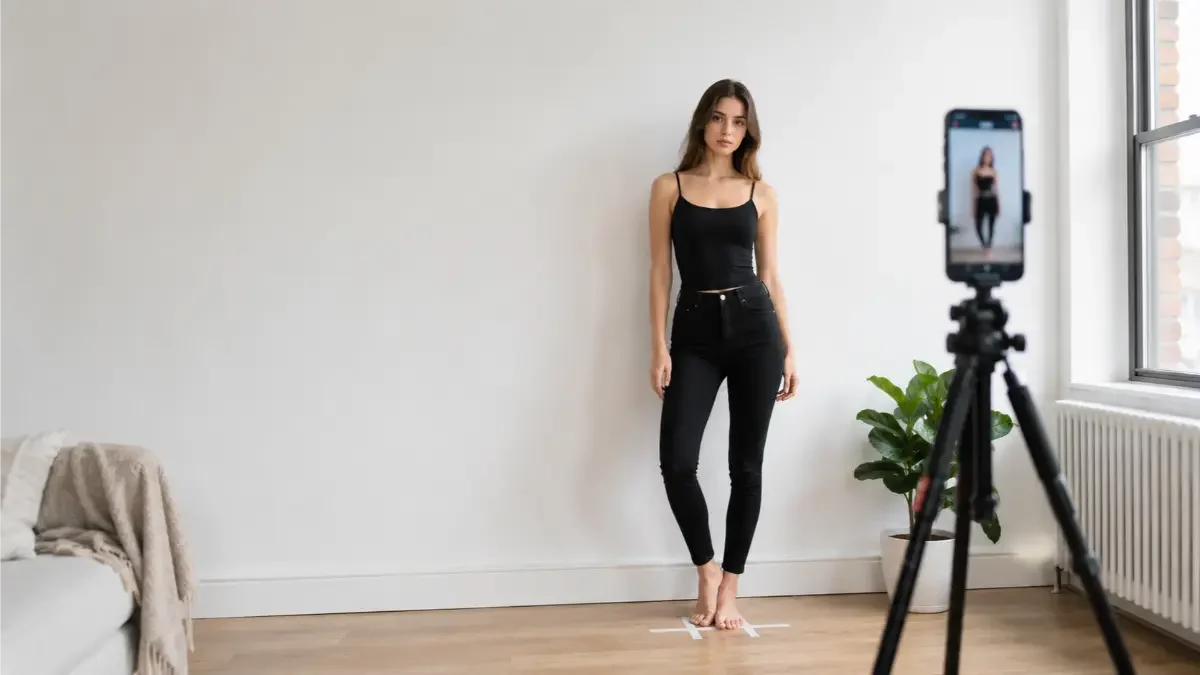
That is why the best home digitals are usually plain to the point of comedy. Clean face. Simple clothes. Bare wall. Flat shoes or bare feet. Natural light. No dramatic angles. No “serving.” No mysterious hand choreography. The industry has a long romance with transformation, but digitals sit firmly on the unromantic side of the business. They are evidence.
What agencies want is consistency and accuracy. If your digitals are heavily edited, aggressively posed, or shot in moody light that makes you look like you live inside a fragrance ad, the photos may be pretty, but they are not useful. And usefulness is the whole game here. The quiet magic of a strong digital is that it makes a stranger trust what they are seeing.
“The camera never lies” is not quite true, but digitals should make that old line feel almost plausible.Start with the setting. Stand against a plain wall, ideally white, gray, or beige, with enough space around you that your body is clearly separated from the background. Face a window with soft daylight. Avoid direct midday sun, which creates hard shadows under the eyes and chin, and avoid dim overhead lighting, which can make everyone look as if they have just received troubling news. Morning light or late afternoon light tends to be kinder and clearer.
Use a phone camera if that is what you have; modern phones are perfectly capable. What matters more is how you use it. The camera should be held straight, not tilted up from the floor like an action film and not down from above like a social post from 2016. Keep it at about chest or waist height for full-length shots and at eye level for closer portraits. Turn off beauty filters, portrait blur, skin smoothing, and anything else that politely erases the facts.
What to wear, how to stand, what to shoot
Clothing should be fitted and simple. Think of pieces that reveal your natural shape without turning the image into a styling exercise. For women, that often means skinny jeans or leggings with a fitted tank top. For men, slim jeans or trousers with a fitted T-shirt can work well. Solid colors are best, usually black, white, gray, or denim. Logos, loud prints, oversized silhouettes, and trend experiments only distract from the point, which is your body and face.
Hair should be clean and natural. If it is long, take some shots with it down and some pulled back so your bone structure is visible. Makeup should be minimal to nonexistent. If you use a little concealer or brow gel because it helps you look awake rather than haunted, fine. But the guiding principle is still clarity over performance.
The core set of images is straightforward: a front-facing full-length shot, a side profile full-length shot, a back shot, a waist-up front shot, a close-up headshot, and profile shots of the face. In each frame, stand tall but not stiff. Let your arms rest naturally. Keep your expression neutral or softly pleasant. You are not auditioning for “brooding person in expensive knitwear.” You are showing your structure.
This is where many people make an avoidable mistake. They confuse modeling with posing. In digitals, restraint reads as confidence. A slight shift of weight is fine; a dramatic hip pop or editorial stare is not helping. Agencies are trained to imagine what they can build with you. They do not need a fully produced character. They need clean material.
It also helps to include accurate basic information when sending digitals: height, bust or chest, waist, hips, shoe size, hair color, and eye color. Measurements should be current, not optimistic. Fashion has enough fantasy already. Your email does not need more of it.
The small details that make photos believable
The difference between weak digitals and effective ones usually lives in the small details. A cluttered bedroom corner suggests chaos. A mirror selfie suggests you did not quite understand the assignment. A heavy filter suggests you may be hiding something, even if you are only hiding a breakout. And cropping your feet out of full-length shots is the digital equivalent of mumbling in an interview: perhaps accidental, but not confidence-inspiring.
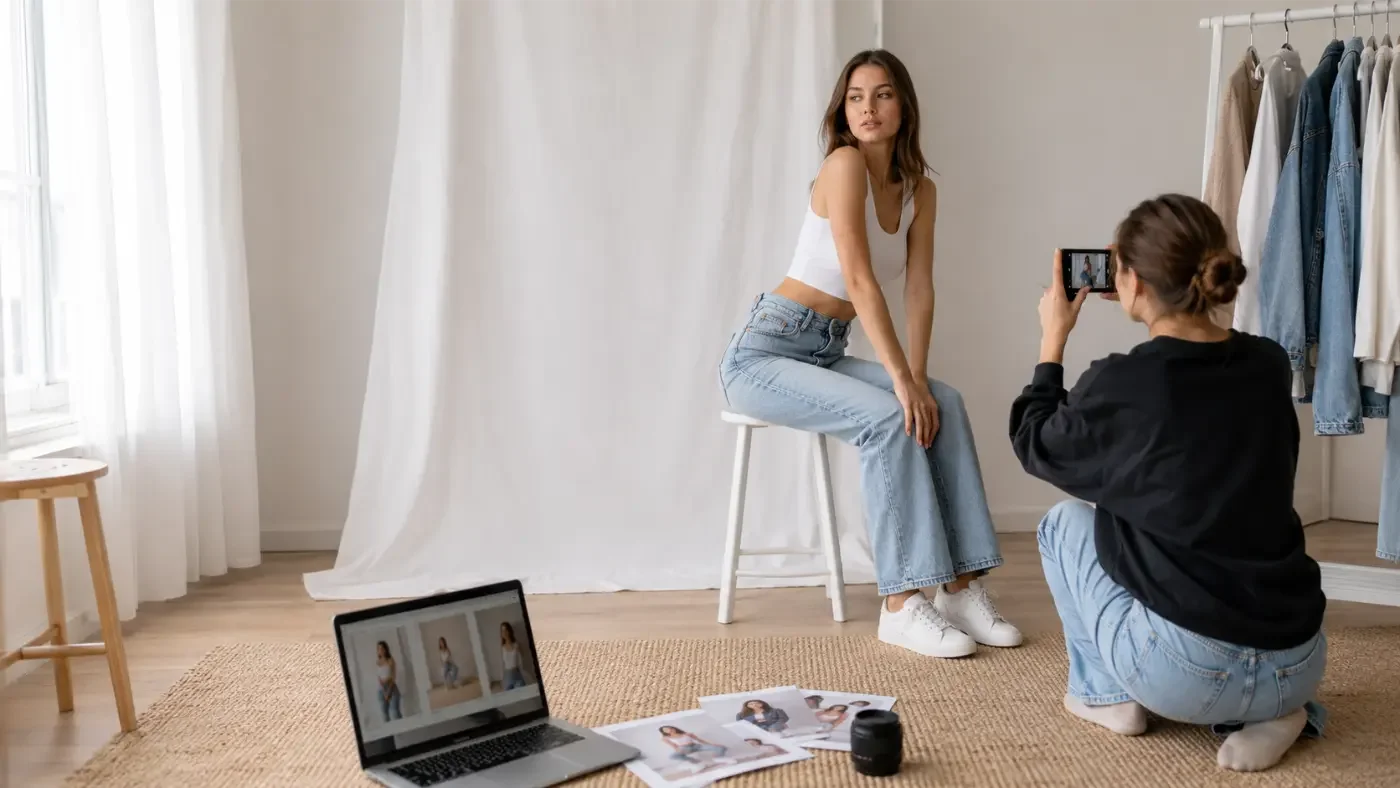
Take several versions of each image and choose the clearest ones. Sharp focus matters. So does posture. Roll your shoulders back gently, lengthen your neck, and stand as if someone just said your name in a waiting room and you would like to be remembered for good reasons. If possible, ask a friend to shoot the photos instead of using a timer. Human beings are still better than timers at tiny corrections, and they are less likely to make you sprint awkwardly into frame.
Before sending, review the images as a set. Do they all look like the same person on the same day? Good. That is what you want. If one photo is bright and clean and another is dark and theatrical, start again. Coherence makes you look professional, even before anyone has met you.
In the end, the best answer to how to take model digitals at home that actually work is almost boringly simple: tell the truth, clearly. Good digitals do not beg for attention. They hold still and let the eye do its work. In a business built on illusion, that kind of plainness is not a weakness. It is a rare and useful form of charm.