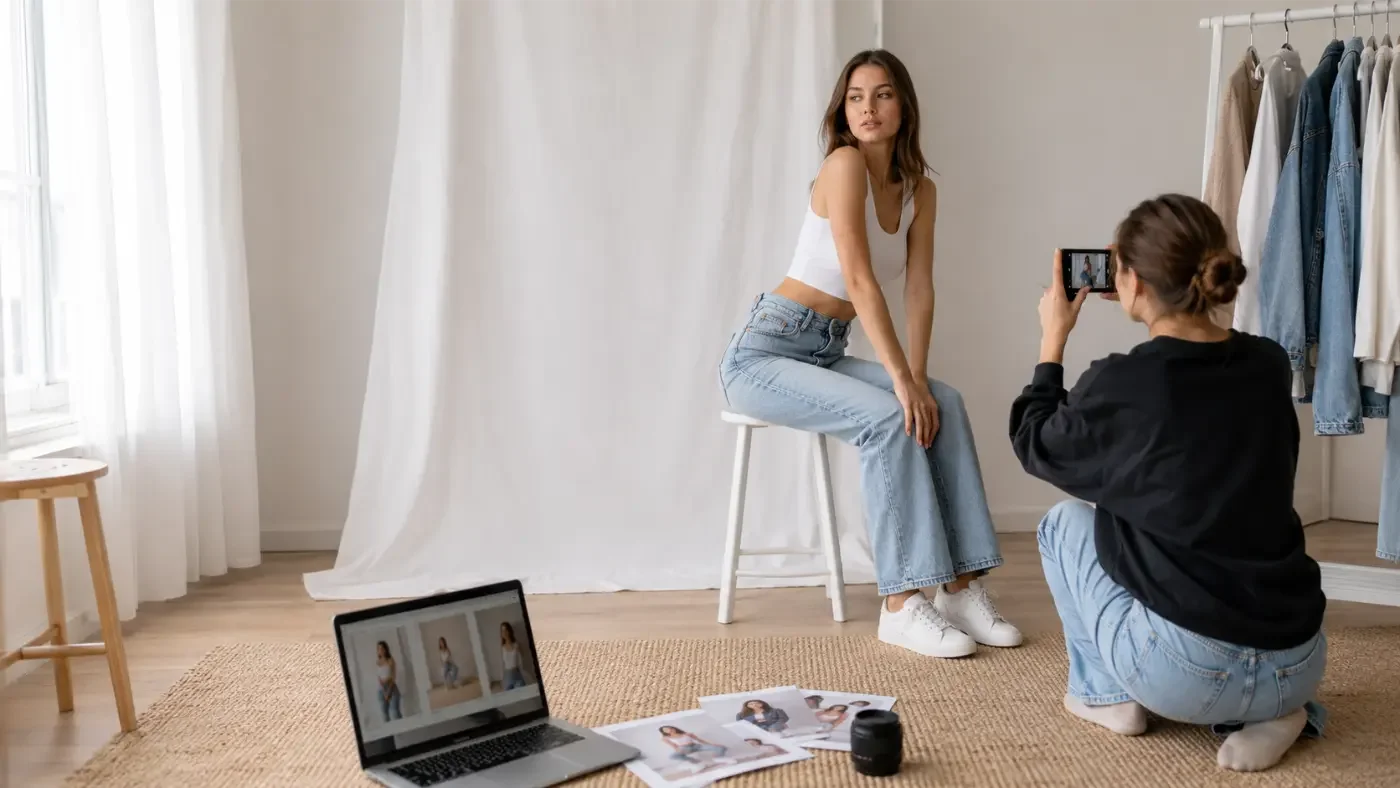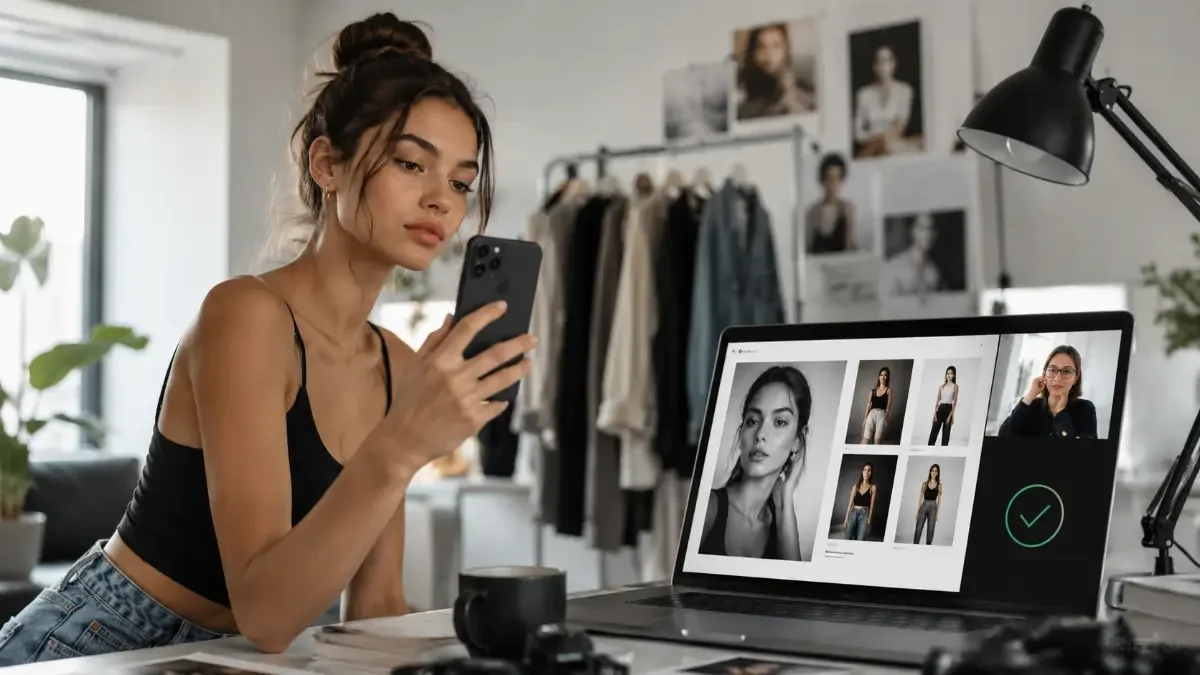
How to get scouted online instead of in person starts with smart photos, a clean profile, and patience. Digital discovery rewards clarity over chaos.
The New Front Door of Modeling
There was a time when model scouting had a very specific mythology. A scout spotted you in an airport, a mall, or while you were buying toothpaste under terrible fluorescent lighting. It sounded glamorous, random, and a little absurd. Sometimes it still happens. But today, the more common version is much less cinematic and far more practical: someone finds you online.
That shift has changed the rules, but not the standards. Agencies are still looking for presence, proportion, personality, and potential. What has changed is the setting. Instead of seeing how you move through a room, they often see how you present yourself on a screen first. If you want to understand how to get scouted online instead of in person, the answer is not to become an influencer, perform like a brand, or drown your page in drama. It is to become easy to assess.
That may sound unromantic, but fashion is full of unromantic truths hiding inside glamorous packaging. A scout reviewing digital submissions is usually looking for clear information fast. They want to know what you actually look like, whether you photograph naturally, and whether you seem professional enough to contact. The profile that works best is rarely the busiest one. It is the one that removes friction.
Start with simple, honest images. Agencies do not need you styled like a campaign to decide whether you have potential. In fact, too much styling can make the job harder. Clean digitals matter because they show your bone structure, proportions, skin, and expression without a smoke machine of filters and heavy edits. A straightforward headshot, profile shot, full-length image, and a couple of natural photos in daylight can do more than twenty highly edited posts taken in a nightclub bathroom mirror. Fashion loves fantasy, but scouting begins with facts.
Your public profile should also make practical sense. Use your real name or something close to it. Include your city. If appropriate, list height and basic measurements accurately, not aspirationally. There is no use in adding two inches the way people add confidence on dating apps. Agencies will find out quickly, and the internet has already given everyone enough reasons to distrust one another.
"Simplicity reads as confidence online because it suggests you are not trying to distract from the product, which is you."That is the quiet logic behind good digital scouting material. Clear face, clear body, clear information. Not boring, just legible.
What Scouts Actually Notice on a Screen
People often imagine online scouting as a game of virality. Go viral, get discovered, become a model by Tuesday. In reality, most reputable scouting is slower and less theatrical. Agencies search social platforms, review tagged submissions, browse referrals, and check direct applications on their websites. They are not always looking for the loudest person in the room. Quite often, they are looking for someone with raw potential who has not overworked their image into oblivion.
This is where restraint becomes strangely powerful. If every image is filtered, intensely posed, or cropped beyond recognition, a scout has very little to evaluate. If your content swings wildly between polished selfies, jokes, old vacation pictures, and twelve reposted memes, that does not disqualify you, but it does muddy the signal. Think of your profile as a waiting room, not a stage. A scout should be able to arrive, look around, and understand who they came to see.
That does not mean your personality should disappear. Quite the opposite. The strongest online presence often combines clean model-ready images with a little evidence of life. A candid smile, natural movement, a relaxed expression, even a slightly awkward photo can help. Agencies are not recruiting mannequins with Wi-Fi. They are looking for people who can photograph well and work well. Warmth matters. So does reliability.
It is also wise to understand what a legitimate approach looks like. A serious agency usually has a verifiable website, listed bookers, and a clear submission process. If someone contacts you from a suspicious account and immediately asks for money, private images, or urgent travel decisions, that is not a glamorous opportunity. That is the digital version of a trench coat in a parking lot. Real agencies may request digitals, measurements, and sometimes a video walk, but they should be traceable and professional.
When you submit yourself, follow directions exactly. If the website asks for no makeup, simple clothing, and natural light, do that. This is not the moment to express yourself through a dramatic hat. Rules in submissions are not there to suppress originality. They are there to create comparability. A scout reviewing hundreds of people needs consistency to spot what is special.
Patience, Timing, and the Small Art of Being Findable
The hardest part of online scouting is that it can feel both immediate and endless. You upload photos in seconds, then wait in a silence that can make anyone feel invisible. But modeling decisions are often slow for reasons that have nothing to do with your worth. An agency may already have someone similar on its board. The market may be changing. Your look may make sense next season and not this one. Fashion likes to pretend it runs on destiny, but much of it runs on timing.
So the smart strategy is consistency without desperation. Keep your profile updated. Post recent, accurate images. Refresh your digitals every few months or when your look changes. Submit to agencies that fit your market, whether that is fashion, commercial, curve, fitness, or a more niche lane. If you hear nothing, improve the materials rather than spiraling. Better daylight, better framing, better clarity. Online scouting rewards incremental intelligence.
It also helps to remember that being scouted is only the beginning. The goal is not just to attract attention. It is to attract the right attention. The best digital presence says, quietly but clearly, that you are someone worth contacting and easy to work with. In an industry built on images, that kind of calm clarity is surprisingly rare.
So yes, you can absolutely be discovered online instead of in person. In many cases, that is now the normal route. But the real trick is not to look discovered already. It is to look visible, honest, and ready. The internet can do many things badly. Occasionally, when you give it clean photos and a sensible profile, it can also open a door.